

Opening a gym is an exciting business opportunity. Fitness has shifted from a lifestyle choice to a cultural staple, and demand keeps growing across nearly every demographic. However, for any entrepreneur thinking about stepping in as an operator, there is a foundational decision to make: gym franchise vs. independent gym ownership?
Generally, if you want structure, faster profitability, and a system that has already been tested, a franchise is likely the better fit. If you have strong business experience, a clear concept, and the drive to build everything yourself, going independent gives you complete control. Both models can work, but it depends on your vision, on your objectives, and on your skills. Choosing the wrong gym type can be an expensive mistake.
In this guide, discover what actually separates the franchise from the independent gym across essential aspects – startup costs, operational support, marketing, time to profitability, and risk tolerance – and learn how to choose the right gym type that fits your profile.
Gym Franchise vs Independent at a Glance
- Franchise gyms reach positive EBITDA in 12 to 18 months on average (as little as 8 months with Curves), while independent gyms typically take longer.
- Starting a franchise typically requires less upfront capital. Curves starts at £45,750 vs £250,000 or more for a typical independent gym.
- A franchise gives you a proven business model, marketing support, and operational systems from day one. An independent gym gives you complete control over every decision.
- The right choice depends less on the numbers and more on your profile: first-time gym owners and career changers or experienced fitness professionals.
- Both models can be profitable. But they reward very different skills, and the wrong choice is an expensive one.
What is the Difference Between a Franchise and an Independent Gym?
A gym franchise gives you access to an established brand, tested processes, and ongoing support from the franchisor, but you must follow the parent brand’s rules and processes. Much of the framework is already in place. Independent gym ownership means designing everything from scratch (concept, activities, pricing, schedule), which offers real and valuable freedom, but carries full risk.
Neither model is inherently superior. But each one requires a different mindset and a different set of resources. The core difference comes down to one question: do you want to follow a proven system, or build your own?
Startup Costs: Franchise vs Independent Gym
Franchises are sometimes dismissed as expensive because of their upfront fees whereas independent gyms are sometimes perceived as cheaper. However, neither assumption holds up once you look at the full picture.
Franchise investment
Initial franchise fees typically range from £40,000 to £120,000, depending on the brand and territory. On top of that, royalty fees generally represent 5 to 8% of gross revenue, plus contributions to a shared marketing fund.
Some franchise models offer a much lower entry point. Curves, for example, requires an initial franchise fee of £22,250 and equipment costs of around £23,500, bringing the total starting investment to approximately £45,750. That is well below the fitness franchise industry average.
Note that while ongoing fees reduce your margin, they fund systems and support that would otherwise cost you time and money to build yourself.
Independent gym investment
When you own your gym independently, initial costs typically range between £200,000 and £400,000, depending on location, size, and fit-out. Contrary to a franchise, there are no royalty fees.
However, that saving is often offset by higher early-stage costs: building brand awareness from zero, no negotiated supplier rates, and a longer path to profitability.
Moreover, if the absence of recurring fees is real, so is the absence of the support those fees provide.
| Franchise | Independent | |
|---|---|---|
| Initial investment | From £45,750 (Curves) | £200,000–£400,000+ |
| Royalty fees | 5–8% of revenue | None |
| Marketing fund | Included in fees | Self-funded |
| Equipment sourcing | Provided by franchisor | Self-sourced |
Business support and operational systems
Running a gym is not just about fitness. It involves sales, staff management, retention strategies, scheduling software, and customer relationship management. How you access operational knowledge makes a real difference in your first two years.
What franchises provide
Joining a franchise means buying into a proven business model already tested across multiple markets. From day one, you receive training in operations, sales, and member retention. You get access to management software, staff onboarding materials, and ongoing coaching from the franchisor.
Problems that might take an independent owner months to identify have already been solved. You apply the solution rather than searching for it. That considerably shortens the learning curve. It’s one of the many advantages of franchising.
The Curves model: what you are actually buying into
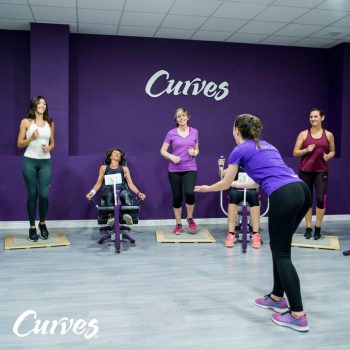
Curves is built around a 30-minute circuit training program, designed exclusively for women. Sessions alternate between hydraulic strength machines and recovery stations, moving through the full circuit at a set pace. The format is fixed and coach-led: members do not design their own workouts. Every session is the same structure, which is precisely the point.
This has a direct impact on your cost structure as a franchisee. A Curves club requires significantly less floor space than a traditional gym, which reduces rent. The equipment list is defined and supplied by the franchisor. Staffing is simpler: no class timetable to fill, no specialist instructors to schedule. The model is lean by design, and that is why the numbers work.
Targeting women exclusively also defines your market clearly from day one. You are not competing with every gym in town. Your target market is defined from the start: women who actively seek a non-mixed environment, and that remains underserved by most fitness concepts. With a presence in over 40 countries, Curves has successfully established this positioning at scale.
What independent owners must build
An independent gym owner builds all operational systems from scratch. That means selecting software, developing training materials, designing membership structures and pricing, and learning through trial and error.
Many successful independent gyms have done exactly that. However, this type of gym requires either strong prior business experience or the willingness to invest in consultants early on. Underestimating this aspect is one of the most common reasons independent gyms struggle in their first two years.
Gym Marketing: Brand Building and Customer Acquisition
Getting members through the door is the lifeblood of any gym. How you do it, and what it costs, varies significantly between whether you operate a franchise or an independent gym.
Franchise brand power
A franchise gives you immediate credibility. Prospective members already recognise the brand, trust the concept, and know what to expect. That reduces the friction of conversion, especially in the first months of operation.
Franchisors also provide national advertising campaigns, local marketing templates, and access to proven lead generation tools. The brand guidelines help you maintain brand consistency across every touchpoint, from signage to social media.
If you operate a franchise, you will still need to execute locally, but the foundation is already built.
Building your own brand
An independent gym starts with zero brand awareness. Every prospective member needs to be convinced from scratch. To make your gym, and your brand, known to the public, you will need to build your own marketing strategies across digital channels, local partnerships, and community building.
The upside is flexibility. You can target your exact audience, test creative approaches, and adapt quickly to what works in your market. Some independent gyms build remarkably strong local identities by going deep into a specific market rather than broad.
The challenge is cost and time. Strong independent marketing requires a significant budget, significant personal involvement over long periods of time, or both.
Gym Profitability: How Long Before You Break Even?
Time to profitability is one of the most important variables to understand before committing to either model. While franchises generally achieve profitability quicker than independent gyms, in the long term, the latter can yield higher profits.
Franchise timeline
Franchise gyms typically reach profitability within 12 to 18 months. Brand recognition, operational systems, and marketing support compress the ramp-up period considerably.
With Curves, the timeline to profitability is even shorter. Franchisees achieve an average positive EBITDA within 8 months of opening, and positive cash flow by Year 2. That is well ahead of the fitness industry average, and it reflects a model built specifically to reduce early-stage losses.
Independent timeline
Independent gyms generally take between 18 and 30 months to reach profitability. Building brand awareness from zero, developing operational systems, and acquiring members without an established name all extend the break-even period.
This does not mean independent gyms are less profitable long-term. A well-run independent gym can generate strong margins once established. But the financial pressure during the ramp-up phase is higher, and the margin for error is smaller.
Which Gym Model Fits Your Profile?
If you thrive in a defined system, with clear playbooks, strict processes, and a supportive network behind you, a franchise will better fit your profile. If you’re a builder at heart, with a need to own every decision and want to shape the culture, the brand, and every detail of the member experience, an independent gym is where you will thrive.
Honest self-assessment here is as important as any spreadsheet to make sure you make the right decision.
Choose a gym franchise if:
- You are one of many first-time gym owners with limited prior experience in the fitness industry
- You want a structured path to profitability with reduced operational risk
- You work well within established frameworks and do not need to reinvent the concept
- You want to focus on running and growing the business rather than designing it
- Speed to positive cash flow is more important to you than full creative control
Franchisees who struggle are rarely short on capital. They underestimate how much structure actually costs them in autonomy, and find the framework frustrating rather than supportive.
Choose an independent gym if:
- You are among the fitness professionals who already have a history in gym or fitness management
- You have a distinctive concept that would not fit within a franchise framework
- You are confident in your ability to build systems, attract members, and manage uncertainty
- You are willing to accept a longer path to profitability in exchange for full ownership of the brand
Independent owners who fail rarely lack passion. They underestimate the operational and marketing burden of starting with zero brand awareness.
In both cases, the fundamentals remain the same: a realistic business plan, a well-chosen location, solid member retention, and consistent marketing.
If you are leaning toward a franchise, Curves may be the ideal path to opening your gym. It is not a conventional gym franchise, but a 30-minute circuit concept built exclusively for women, with a lean format that keeps overhead low and a clearly defined audience that makes member acquisition straightforward. You open a gym with a concept that already works, in a market that is actively looking for it.
Find out more about the Curves franchise
FAQ
Is a gym franchise more profitable than an independent gym?
Not necessarily long-term, but franchises reach profitability faster. Franchise gyms typically break even within 12 to 18 months, against 18 to 30 months for independent gyms. The gap comes down to brand recognition, operational readiness, and marketing support available from day one.
How much does it cost to open a gym franchise?
It depends on the brand. Entry-level fitness franchises start around £45,000 to £50,000, which is where Curves sits. Mid-range options typically require £80,000 to £240,000 in total investment. Always factor in royalty fees, marketing contributions, and working capital on top of the initial franchise fee before committing.
Can an independent gym compete with a franchise?
Yes, but positioning is everything. Independent gyms that serve a specific community or offer a distinctive experience can build strong, loyal member bases. Competing directly against an established franchise on the same concept and market is a harder path. Differentiation is the key variable.
What are the main risks of opening an independent gym?
The biggest risks are slower brand building, a longer time to profitability, and the burden of building all systems from scratch with no external support. Poor location choice and underestimated fixed costs, particularly rent and staffing, are the two most common reasons early-stage independent gyms fail.